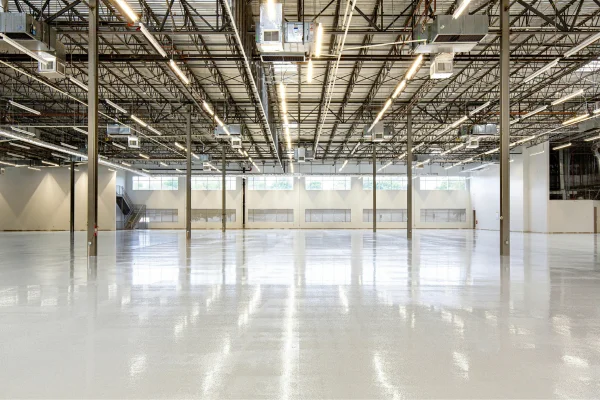
Industrial facility managers have to balance maintenance needs against operating budgets, production schedules, safety requirements, and long-term plans for the property. Painting and protective coatings can become difficult to budget for because different areas of a facility deteriorate at different rates.
Structural steel may begin showing signs of corrosion while interior walls are still in good condition. Floor coatings can wear faster in forklift lanes and production areas. Exterior metal may need attention sooner because of moisture and weather exposure. If every issue is addressed only after it becomes urgent, painting costs become harder to predict.
A facility maintenance painting plan gives facility managers a better way to organize these needs. Instead of treating every project as an unexpected expense, facilities can identify problem areas, establish priorities, and plan coating work around available budgets and operating schedules.
Caligari Gerloff Painting (CGP) provides industrial and commercial painting and coating services for facilities throughout the Norfolk and Richmond areas. For facility managers developing an annual or multi-year maintenance budget, the first step is understanding what should be included.
What Should a Facility Maintenance Painting Budget Include?
There is no standard painting budget that applies to every industrial property. A distribution warehouse has different needs than a manufacturing plant, processing facility, or industrial complex.
Start by identifying the painted and coated assets throughout the property. Depending on the facility, these may include:
- Structural steel
- Interior and exterior walls
- Ceilings
- Concrete floors
- Tanks
- Piping
- Machinery and equipment
- Loading areas
- Production spaces
- Safety markings
- Railings and stairs
- Exterior metal components
Once these areas are identified, evaluate their current condition and the type of exposure they experience.
The budget also needs to account for more than paint and labor. Surface preparation, access equipment, containment, coating materials, safety requirements, project phasing, and cure times can all affect the total cost.
Start With a Facility-Wide Coating Assessment
Before assigning dollars to facility maintenance painting, facility managers should know what condition their existing coatings are in.
A facility walkthrough can help identify peeling, blistering, cracking, fading, rust, exposed substrates, worn floor coatings, damaged safety markings, and areas affected by moisture or chemical exposure.
Document where each problem is located and how serious it has become. Photos can also help maintenance teams track whether deterioration is progressing between inspections.
The goal is to identify coating problems before they develop into larger maintenance issues.
For example, a small area of corrosion on structural steel may require localized preparation and recoating. If that area remains exposed and corrosion spreads, future work may require much more extensive surface preparation.
The same principle applies to concrete coatings. A few worn areas may be manageable during a planned maintenance period. Waiting until large sections have failed could require a larger project and create more disruption to facility operations.
Prioritize Facility Maintenance Painting by Risk
The surface that looks the worst is not always the one that should receive funding first.
Industrial facilities should prioritize coating projects based on the consequences of delaying the work.
A faded office wall may have little effect on operations. Corrosion on steel, deteriorating coatings around equipment, or worn safety markings could have a much greater impact.
One practical approach is to divide projects into three categories.
Critical Coating Work
These projects address conditions that could affect safety, important facility assets, production areas, structural components, or other high-priority parts of the property.
Active corrosion, widespread coating failure, damaged safety markings, and deterioration in aggressive environments may fall into this category.
Preventive Coating Work
These surfaces are still performing but have begun to show signs of wear.
Addressing deterioration at this stage may reduce the amount of preparation and repair required later. Preventive work can also be easier to schedule because the facility is not responding to an immediate failure.
Routine and Appearance-Based Work
Some painting projects are primarily intended to maintain a clean, professional facility.
Office areas, corridors, common spaces, and other lower-risk surfaces may have more flexibility in the maintenance schedule. These projects still deserve a place in the budget, but they may be easier to move between budget cycles if higher-priority work arises.
Do Not Underestimate Surface Preparation Costs
One of the most important parts of an industrial painting budget is also one of the least visible after the project is finished.
Surface preparation directly affects how well a new coating can bond to the substrate. Existing rust, loose coatings, grease, dirt, moisture, and other contaminants may need to be addressed before new coatings are applied.
The required preparation will depend on the substrate and coating system. Work may involve cleaning, power washing, mechanical preparation, abrasive blasting, or other methods based on project conditions.
This is an important consideration when comparing contractor proposals.
A proposal with a lower price may include less preparation than another bid. If the coating system is installed over an improperly prepared surface, premature failure could result in another round of labor, materials, preparation, and downtime.
Facility managers should review exactly what surface preparation is included instead of comparing total prices alone.
Budget for the Conditions Inside Your Facility
Different parts of an industrial property can require completely different coating systems.
A warehouse wall does not experience the same conditions as a production floor. Exterior structural steel has different requirements than machinery located inside a controlled environment.
Industrial coatings may need to withstand:
- Chemical exposure
- Oils and grease
- Moisture
- High humidity
- Abrasion
- Forklift traffic
- Equipment traffic
- Impact
- Temperature changes
- UV exposure
- Frequent cleaning
- Salt exposure
Facilities near the Norfolk area may also need to consider how coastal humidity and salt exposure affect exterior steel and other metal components.
Choosing coatings based solely on upfront material cost can create problems if the product is poorly suited for its environment. Expected exposure, service life, maintenance requirements, and future recoating needs should all be part of the decision.
Plan Facility Maintenance Painting Around Operations
The contractor’s invoice is not the only cost associated with an industrial painting project.
Downtime can have a major impact on the true cost of the work.
Closing a production area, restricting access to a warehouse aisle, moving equipment, or taking a loading area out of service can affect daily operations. Some coating systems also require specific cure times before areas can return to normal use.
That makes scheduling an important part of facility maintenance painting.
Facility managers should identify opportunities such as scheduled shutdowns, slower production periods, weekends, equipment maintenance windows, or planned facility closures.
Larger projects may also be divided into phases. Instead of closing an entire production or warehouse area, the contractor may be able to complete one section at a time.
These scheduling requirements should be discussed during the estimating process. A contractor needs to understand how the facility operates before developing a realistic project plan.
Build Painting Into a Multi-Year Maintenance Plan
Industrial painting does not need to be budgeted one year at a time.
Creating a multi-year plan can make larger projects easier to manage and give facility managers more control over future spending.
Maintain an inventory of major painted and coated assets. Record when areas were last painted, which coating systems were used, what repairs have been completed, and where deterioration has started.
From there, projects can be organized across future budget cycles.
For example, a facility might address exterior structural steel this year, production floors next year, and warehouse interiors the following year. Smaller touch-ups and repairs can remain part of the annual maintenance budget.
The schedule should remain flexible. Coating condition, rather than a fixed calendar date, should determine when work is actually required.
Regular inspections can help facility managers adjust the plan as conditions change.
Compare Industrial Painting Proposals Carefully
Two painting contractors may provide very different prices for what appears to be the same project.
The difference often comes down to scope.
Before selecting a contractor, compare:
- Surface preparation requirements
- Coating systems and products
- Number of coats
- Application methods
- Access requirements
- Containment
- Safety procedures
- Project schedule
- Cure times
- Areas included in the proposal
- Warranty terms
A lower initial price does not automatically mean a lower long-term cost.
If a coating fails earlier than expected, the facility may have to pay for preparation, labor, materials, equipment access, and operational disruption again. Looking at expected coating performance and service life gives facility managers a better basis for comparing proposals.
Set Aside Funds for Unplanned Coating Needs
Even a well-developed maintenance plan cannot predict every issue.
Leaks, equipment changes, building modifications, chemical spills, impact damage, and unexpected corrosion can create painting or coating needs during the year.
Consider maintaining a portion of the annual facility maintenance painting budget for smaller unplanned projects.
This reserve can help address localized problems quickly without taking money away from larger projects that have already been scheduled.
It can also prevent minor coating failures from sitting untreated simply because they were not included in the original annual budget.
Create a Smarter Facility Maintenance Painting Plan With CGP
A painting budget should help facility managers make decisions before coating problems become urgent.
Assessing existing conditions, ranking projects by risk, accounting for proper surface preparation, selecting coatings for the actual environment, and coordinating work with facility operations can make maintenance spending much easier to plan.
CGP works with industrial and commercial facilities that need painting and protective coating systems built around real operating conditions. From industrial coatings and structural steel to concrete floors and other high-use surfaces, our team can help identify coating needs and develop a practical scope of work.
Planning next year’s maintenance budget or deciding which coating projects should come first? Contact Caligari Gerloff Painting to schedule a facility assessment and discuss your upcoming facility maintenance painting needs.
FAQ
How far in advance should industrial painting projects be included in a maintenance budget?
Larger painting and coating projects should ideally be identified during annual budget planning, especially when work must coordinate with shutdowns or production schedules. Regular coating inspections can help facility managers forecast these expenses before deterioration becomes urgent.
Is it more cost-effective to repaint an entire area or repair failing sections?
It depends on how widespread the coating failure is and the condition of the existing system. Localized repairs can make sense when deterioration is limited, while widespread adhesion problems, corrosion, or coating failure may justify a larger recoating project.
What information should facility managers provide when requesting an industrial painting estimate?
Provide details about the surfaces involved, current coating condition, exposure to chemicals or moisture, operating schedules, access restrictions, and any known coating history. A site assessment can then help determine preparation requirements, coating specifications, project phasing, and an accurate scope of work.

John Yuill is the President of Caligari Gerloff Painting and Coatings, a leading provider of commercial, industrial, and maritime coating solutions in Norfolk, Virginia. With 16 years of experience at Caligari, John and his brother-in-law proudly carry on the family business’s legacy. A graduate of the University of Virginia, John holds an SSPC QP1 certification and specializes in applying specialty coatings to complex industrial and maritime structures. His deep industry expertise ensures Caligari Gerloff remains a trusted name in high-performance coatings.